
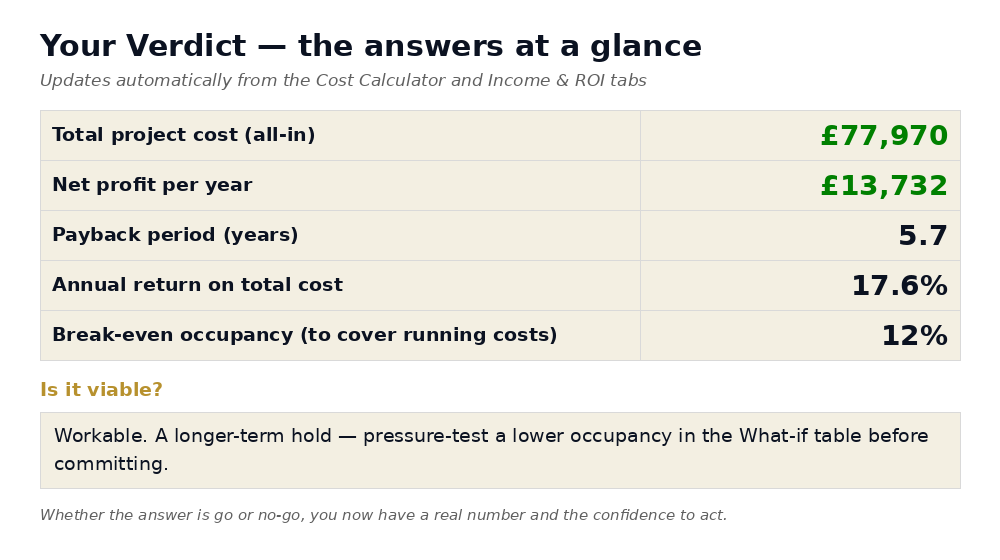
The Opportunity, in Plain Numbers
Vintage British Rail sleeping carriages — Mk1, Mk2 and Mk3 stock — are earning £150 to £300 a night as converted glamping accommodation across the UK. Acquisition starts around £15,000 for a structurally sound carriage; conversion typically runs £30,000 to £60,000. On a site with genuine leisure demand, landowners reach full return on investment within two to three seasons.
The appeal is architectural as much as financial. Original wood-panelled compartments, brass fittings and corridor windows create an atmosphere no purpose-built pod can replicate — which is why converted carriages consistently rank among the highest-reviewed listings on Airbnb and Canopy & Stars, at review scores above 4.9 and repeat-booking rates well ahead of standard holiday lets.

Proof It Works: Carriages Earning Right Now
These aren't concepts — they're converted carriages taking bookings on Airbnb, Booking.com and Canopy & Stars today. Open any of them to see the fit-out and what guests are paying per night.
The Siphon
St Austell, Cornwall
GWR Siphon milk van · 4.8★ (185 reviews)
View live listing →Coalport Station Carriage
Ironbridge Gorge, Shropshire
GWR-style carriage · Superhost
View live listing →Railway Carriage & Hot Tub
Longtown, Herefordshire
Original 1920s carriage · 9.3 score
View live listing →High Cross Camping Coach
Dorset (Jurassic Coast)
Victorian LB&SCR carriage
View live listing →The Victorian Railway Carriage
Coppins Farm, Suffolk
Victorian carriage · Dedham Vale AONB
View live listing →Prices are the nightly rates seen at the time of writing and vary by season and dates. Links open external booking sites; we're not affiliated with these operators — they're shown as real market examples.
Model Your Return
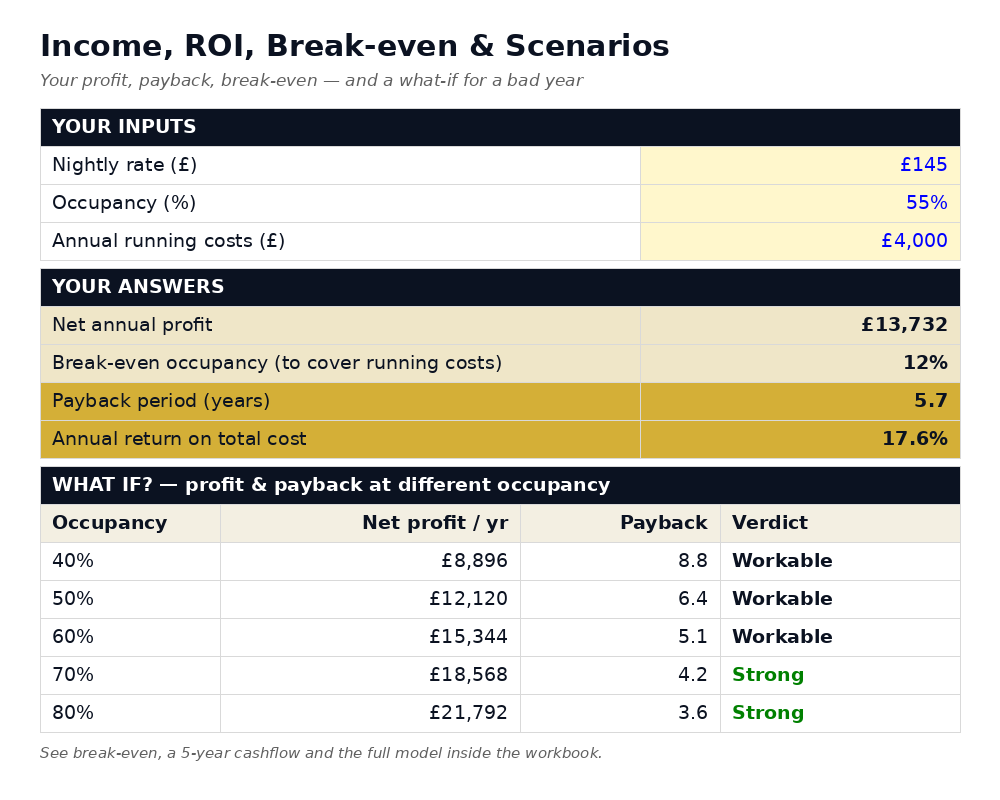
Move the sliders to your own numbers. This is the single calculation that decides whether a project is worth starting — so start here, then send us the inputs and we'll pressure-test them against real stock and your site.
Estimated net profit / year
£35,872
Pays back in 2.1 years
Illustrative only. Figures are based on publicly reported market rates and operator occupancy; your results depend on location, fit-out quality and demand. Running costs assumed at ~22% of gross (cleaning, OTA fees, insurance, maintenance).

What It Really Costs, Line by Line
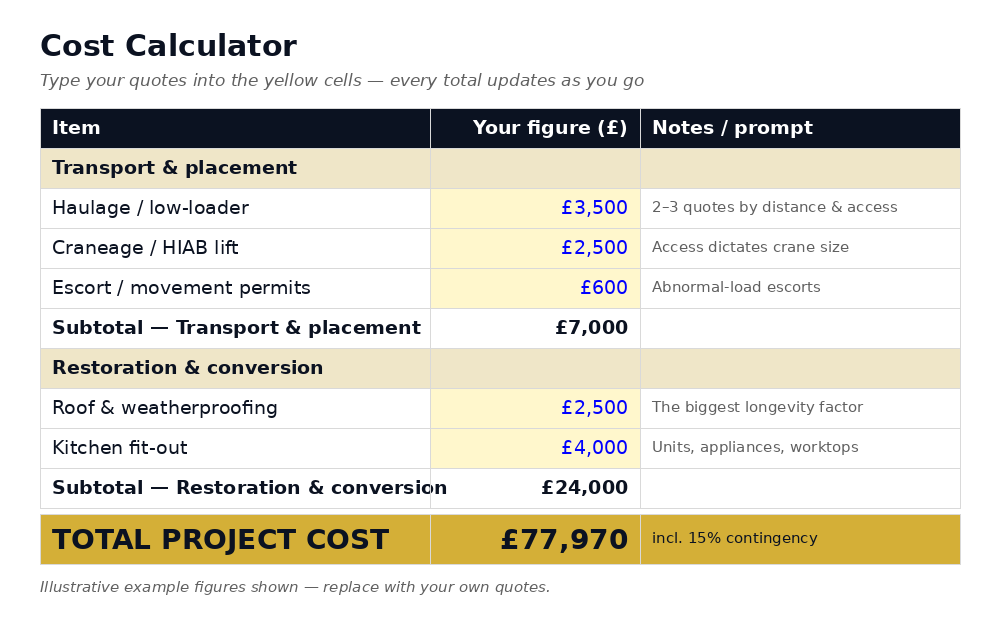
The acquisition price is the smallest line in the budget. Here is the honest, all-in picture — the figure most first-time buyers get wrong is haulage.
Carriage acquisition (Mk1 / Mk2 / Mk3, sound)
The smallest line in the budget
£15,000 – £30,000
Specialist haulage & craning
More for remote or access-restricted sites
£3,000 – £8,000+
Groundworks, base & utility connections
Level hardstanding, water, waste, power
£5,000 – £15,000
Conversion & interior fit-out
Insulation, weatherproofing, plumbing, electrics
£30,000 – £60,000
Surveys, planning & professional fees
Structural, asbestos, planning application
£2,000 – £5,000
Typical all-in, turnkey
Ready to accept its first booking
£60,000 – £100,000

How the Whole Transaction Works
Nine steps from an idea to a carriage earning its keep. Tap any step to see what it involves — and where we take the weight off you.
You tell us your land (location, access, ground conditions), intended use, and total budget. We tell you immediately whether the numbers work and what class of carriage fits.

Why Sourcing Is the Hard Part — and How We Handle It
There is no single public marketplace for railway carriages. Sound, convertible stock surfaces irregularly and sells fast — often before it is advertised — and judging a carriage's true condition takes an experienced eye. Get it wrong and the wrong carriage can cost tens of thousands to remediate, or prove impossible to move to your site at all. That is exactly what our service removes.
Identification & condition assessment
We maintain relationships with rolling-stock brokers, private sellers and heritage railways decommissioning fleet. Each carriage is checked for structure, asbestos and conversion viability before you ever see it.
Haulage & delivery logistics
We co-ordinate the full chain — low-loader transport, route surveys, craning and any temporary access works — from siding to your site.
Planning & conversion guidance
We connect you with architects and builders who have completed carriage conversions, plus a briefing on permitted-development thresholds, environmental health and site prep.
Ready to find the right carriage?
Send us your land, intended use and budget. We reply with matched, condition-checked stock and a tailored sourcing brief.
Request Carriage Sourcing →Planning Permission & Regulations
This is where carriage projects most often stall. A carriage sited for holiday letting will usually need planning permission — for the siting or a change of use — and permitted-development rights rarely stretch to a commercial let. Engage your local planning authority before you buy, not after. A let must also meet fire and gas-safety rules, hold an EPC, and may attract business rates rather than council tax; serving food adds food-hygiene registration. None of it is insurmountable, but all of it is easier to plan for than to retrofit. Treat this as general guidance and confirm specifics with your authority and a planning consultant.

The Questions Everyone Asks First
There is no single public marketplace. Sound, convertible stock comes from rolling-stock brokers, private owners, and heritage railways clearing surplus fleet — and it usually sells before it is ever advertised. That is precisely why a sourcing service exists: we see the stock you can't, and we move on it fast.