Why Cotswolds works for a carriage stay
- ✦The Cotswolds is the largest National Landscape (AONB) in England and Wales, at roughly 2,000 km² — a protected setting that is itself the draw.
- ✦Honeypots like Bourton-on-the-Water, Bibury, Castle Combe and Broadway, plus the 102-mile Cotswold Way, sustain year-round couples-and-walkers demand.
- ✦Proximity to London and the Midlands makes it a reliable, high-rate weekend market.
Carriages already earning here
Real, operating carriage stays in Cotswolds — proof the market exists. We're not affiliated with these; they're shown as live examples.
Planning & the rules in England
England judges siting a carriage for letting as a material change of use, so assume planning permission and building regs are needed. The Cotswolds National Landscape team scrutinises visual and landscape impact closely, so a screened, well-chosen plot is far easier to consent than an exposed one. Second-home council-tax premiums (up to an extra 100% from April 2025) are adopted council-by-council — check the position with Cotswold District Council or the relevant unitary before you budget.
Where the carriages come from
The Gloucestershire Warwickshire Steam Railway at Toddington, on the Cotswold edge, is the natural regional heritage line. Heritage lines rarely advertise stock publicly but periodically dispose of surplus Mark 1 and Mark 2 coaches — approach their carriage-and-wagon departments directly and watch heritage-rail news for disposal notices.
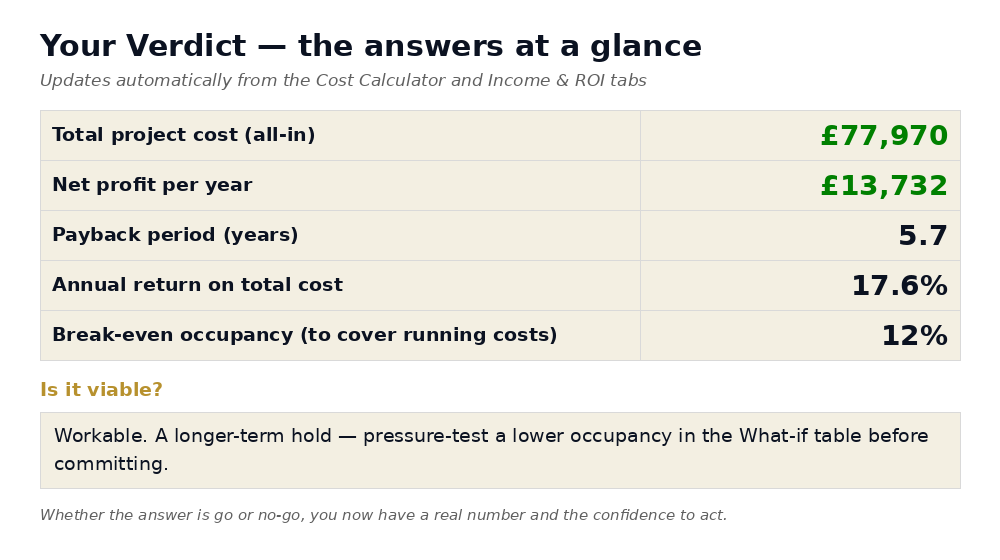
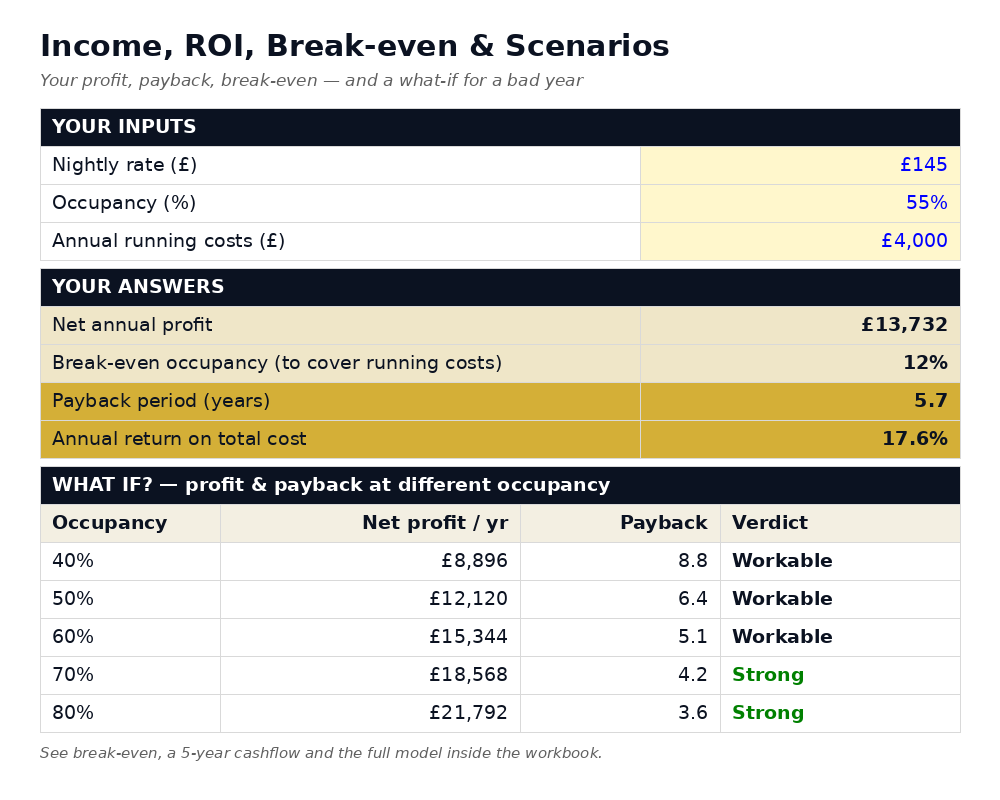
On the numbers: No reliable public nightly-rate or occupancy figure for Cotswold carriage lets — model conservatively in the workbook.